JFrog: AI Agents Vanish After Sessions, Leaving SDLC Audit Trails and Supply Chains Vulnerable
JFrog research finds that autonomous AI agents create ephemeral decision trails that bypass traditional human-centric SDLC controls and audit standards.
Key points
- AI agents perform SDLC tasks but their reasoning and tool calls vanish after sessions end.
- Traditional git logs and peer reviews fail to capture agentic provenance or intent.
- New supply chain risks include prompt injections, malicious MCP tools, and model misalignment.
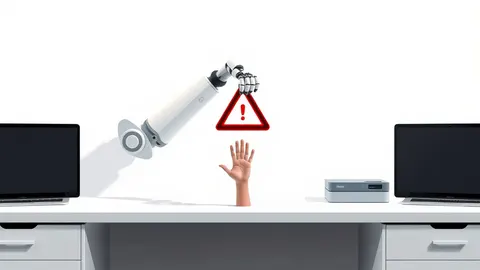
JFrog published research highlighting how autonomous AI agents disrupt standard software development governance. The report states that agents now create pull requests, select dependencies, and execute infrastructure changes. However, these agents are ephemeral, meaning their reasoning and decisions disappear when sessions end, leaving no accountable trail.
Why does agentic SDLC break traditional governance?
Traditional SDLC controls assume human decision-making. Peer reviews, traceable intent, and release gates rely on human identities and accountability. JFrog notes that compliance frameworks like SOC 2 and FedRAMP were formalized before the agentic era. Consequently, they lack mechanisms to verify non-human actions or capture the specific models and tools used by AI agents during development.
What specific risks do AI agents introduce?
Agents introduce new supply chain attack surfaces. JFrog identifies prompt injections, malicious Model Context Protocol tools, and jailbreaks as key vectors. Agents also make non-deterministic decisions that can introduce latent vulnerabilities passing functional tests. Human reviewers face volume overload, leading to rubber-stamping of thousands of lines of agentic code, which further reduces effective oversight.
How do regulations address these gaps?
The EU AI Act mandates automatic event recording and human oversight for high-risk AI systems. Article 12 requires log retention, while Article 14 demands effective oversight during use. The OWASP AI Security Verification Standard sets voluntary requirements for logging AI interactions with session context. These standards aim to capture security-critical actions, including approver identity and decision outcomes, which current git logs do not provide.
What is the proposed mitigation strategy?
JFrog suggests attaching provenance data directly to SDLC entities like commits or artifacts. This approach enables automatic release gating through policies and supports post-release troubleshooting. By linking agent actions to specific outputs, teams can maintain accountability. This practice aligns with security-by-design expectations in the EU Cyber Resilience Act and ISO/IEC 42001 governance approaches.
Background: AI agents
AI agents are software systems that perceive their environment, make decisions, and execute actions to achieve specific goals. They move beyond generating text to performing tasks like coding, scheduling, or data analysis. You must treat them as active participants in your network, not passive tools.
Read the full guide: AI Agents Examples: How Autonomous Software Changes Security
What to do and how to stay safe: JFrog
- Audit current logging systems to ensure they capture AI agent sessions and tool calls.
- Review peer review processes to prevent automatic approvals of large agentic code changes.
- Implement policy-based release gates that require provenance data for AI-generated commits.
- Monitor for new OWASP AI Security Verification Standard updates regarding audit log requirements.
Step-by-step guide: AI Usage Policies at Work: How to Prevent Data Leakage
General security guidance from the TechSec Feed newsroom. It is not confirmed advice from the organisations named in this story.
Frequently asked questions
Do current git logs capture AI agent actions?
No, git logs only show final state changes, not the agent's reasoning, tools used, or prompt iterations.
What new attack vectors do AI agents introduce?
Agents introduce risks like prompt injections, malicious MCP tools, misaligned models, and jailbreaks.
Which regulations address AI system logging?
The EU AI Act Articles 12 and 14, and OWASP AISVS standards address logging and oversight requirements.