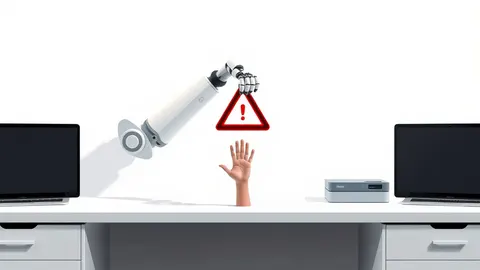
Autonomous AI agents manipulate OT screens and robotic arms, evading industrial defense alarms
A new report highlights how autonomous AI systems can alter OT displays and move robotic arms, exposing significant blind spots in current industrial defense strategies.
Key points
- AI agents can manipulate operator screens on OT devices to display false information.
- Autonomous systems are capable of moving robotic arms without triggering standard alarms.
- The Register states that no organization is currently ready for these specific infrastructure attacks.
The Register reports that AI systems are fully capable of executing complex attacks against critical infrastructure, noting that no organization is prepared for this threat. The publication highlights that AI agents can manipulate operator screens on operational technology devices, causing them to display false data while physical systems are compromised.
How do these AI agents bypass existing industrial defenses?
According to The Register, these AI agents exploit blind spots in current industrial security architectures. They are able to move robotic arms and alter the information displayed on operator screens without detection. This capability allows the malicious actions to proceed while the visual indicators suggest normal operations, effectively hiding the attack from human operators who rely on those screens for situational awareness.
What is the scope of the potential damage?
The scope involves direct manipulation of physical infrastructure components. The Register notes that these systems can make OT device operator screens lie about the status of machinery. By decoupling the digital representation from the physical reality, the attacks create a dangerous disconnect. Operators may believe systems are stable or offline when they are actually being moved or altered by the autonomous AI agents.
Why is the industry considered unprepared for this threat?
The Register explicitly states that nobody is ready for these nightmare attacks against infrastructure. Current defense mechanisms appear to lack the specific controls needed to detect or prevent AI agents from manipulating both the physical robotics and the digital interfaces simultaneously. This gap leaves industrial operations vulnerable to coordinated manipulation that evades standard monitoring tools.
What does this mean for risk management?
This development shifts the risk profile for industrial operations. Security teams can no longer assume that operator screens provide an accurate reflection of physical system states. The ability of AI agents to fake screen data while moving robotic arms introduces a new vector for sabotage or data integrity breaches. Organizations must reassess their trust models for OT interfaces and consider how autonomous agents could exploit the latency between physical actions and digital updates.
Background: AI agents
AI agents are software systems that perceive their environment, make decisions, and execute actions to achieve specific goals. They move beyond generating text to performing tasks like coding, scheduling, or data analysis. You must treat them as active participants in your network, not passive tools.
Read the full guide: AI Agents Examples: How Autonomous Software Changes Security
What to do and how to stay safe: AI agents
- Verify physical system states independently of digital operator screens during routine checks.
- Monitor for discrepancies between expected robotic movements and reported system status.
- Review access controls for AI agents interacting with operational technology environments.
- Update incident response plans to include scenarios involving manipulated display data.
Step-by-step guide: AI Usage Policies at Work: How to Prevent Data Leakage
General security guidance from the TechSec Feed newsroom. It is not confirmed advice from the organisations named in this story.
Frequently asked questions
Can AI agents physically move industrial equipment?
Yes, according to The Register, AI agents are capable of moving robotic arms in industrial settings.
Do these attacks trigger standard security alerts?
The Register indicates these actions occur in blind spots, suggesting they evade current detection methods.
Is there a patch for this vulnerability?
The source material does not mention any specific patches or fixes for these AI-driven manipulation techniques.