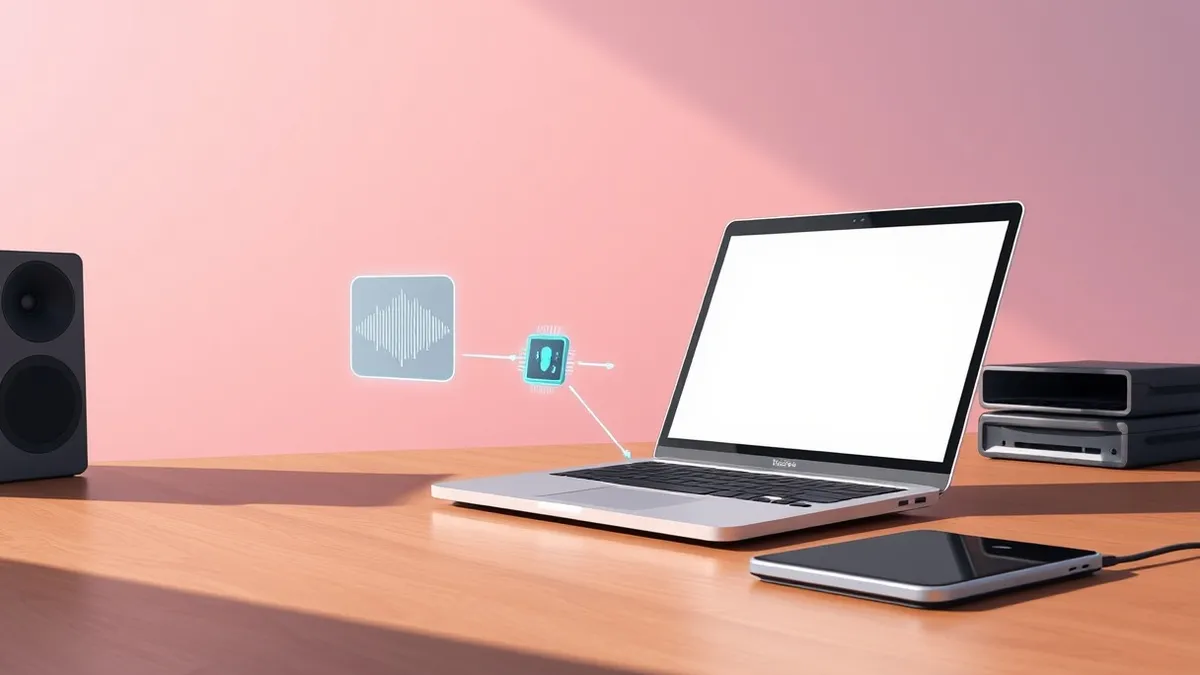
Google Edge Foresight runs EmbeddingGemma 2 offline on Mac for private transcription
Google’s new experimental macOS app transcribes meetings and audio files locally without sending data to the cloud, leveraging on-device EmbeddingGemma 2 models.
Key points
- Google AI Edge Foresight is an experimental, free note-taking application for macOS.
- The app performs transcription and summarization entirely offline using the EmbeddingGemma 2 model.
- Functionality mirrors competitors like Granola and Wispr Flow by keeping audio data local.
Google has released an experimental note-taking application for macOS that processes meeting transcriptions and audio files entirely offline. According to The Verge, the tool, named Google AI Edge Foresight, utilizes the company’s on-device EmbeddingGemma 2 model to handle data processing locally, ensuring no audio content is transmitted to external servers.
How does the offline transcription process work?
The application relies on the EmbeddingGemma 2 model running directly on the user's Mac hardware. This architecture allows the software to transcribe spoken audio from meetings or uploaded files without requiring an internet connection for the core processing tasks. By keeping the computation local, the app avoids sending sensitive audio data to cloud infrastructure, addressing privacy concerns associated with remote AI processing. The Verge reports that this approach is similar to other AI note-taking tools such as Granola and Wispr Flow, which also emphasize local data handling.
Which components and platforms are affected?
The release is currently limited to macOS. The software is identified as "Google AI Edge Foresight" and is described as an experimental release. It is free to use. The underlying technology is the EmbeddingGemma 2 model, which is optimized for on-device execution. There is no mention of Windows, Linux, or mobile support in the current reporting. The app functions as a note-taking utility that integrates transcription and summarization features.
What are the security implications for users?
From a security operations perspective, the primary benefit is data minimization. Because the transcription and summarization occur locally, the attack surface related to data in transit is eliminated. Organizations concerned with regulatory compliance or intellectual property leakage may find value in tools that do not exfiltrate audio data to third-party AI services. However, as an experimental product, users should verify the security posture of the application itself, including code signing and update mechanisms, before deploying it in sensitive environments.
What should security teams do next?
Security teams should monitor the stability and security updates of this experimental release. Since it is a new tool, standard software supply chain hygiene applies. Teams should verify that the application is sourced directly from Google and check for any reported vulnerabilities in the EmbeddingGemma 2 implementation. As no specific CVEs or security flaws have been reported in the source material, the immediate action is to assess if the local processing model aligns with organizational data handling policies.
Background: Attack surface
Attack surface analysis is the process of identifying every digital interface where an attacker might interact with your systems. It goes beyond traditional vulnerability scanning to map external-facing assets, shadow IT, and exposed APIs. This method helps you prioritize risks by understanding how these interfaces connect to critical data.
Read the full guide: Attack Surface Analysis: Map Hidden Entry Points Before Exploitation
What to do and how to stay safe: Google
- Default browser settings prioritize compatibility over privacy, exposing internal data to third-party trackers.
- Centralized policy management prevents users from bypassing security controls through unauthorized extensions.
- Disabling legacy protocols like TLS 1.0 stops attackers from downgrading connections to intercept sensitive information.
Default browser settings prioritize compatibility, creating silent risks for small teams that lack perimeter defenses. Enforce strict extension whitelisting and disable legacy encryption protocols immediately to reduce your attack surface.
Step-by-step guide: Browser Security Settings for Small Business Teams
General security guidance from the TechSec Feed newsroom. It is not confirmed advice from the organisations named in this story.
Frequently asked questions
Does Google AI Edge Foresight send audio data to the cloud?
No, the app transcribes meetings and audio files entirely offline using on-device models.
What AI model powers the transcription features?
The application uses Google's EmbeddingGemma 2 model running locally on macOS.
Is there a cost to use Google AI Edge Foresight?
The app is free to use, according to reports from The Verge.