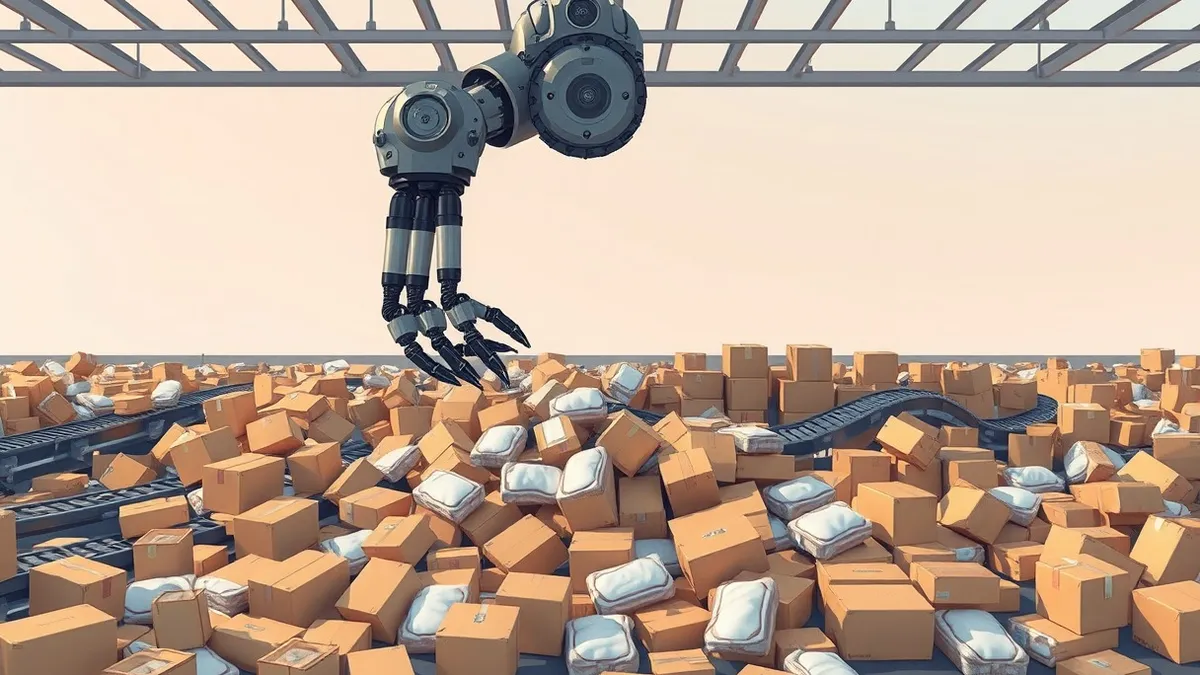
Walmart's Symbotic robots struggle with boxes and turkeys, complicating logistics modernization
Automated sorting machines at US warehouses encounter physical handling issues, complicating the retailer’s logistics modernization and Symbotic stake.
Key points
- Walmart is automating approximately 200 US warehouses with partners like Symbotic.
- Machines have encountered technical kinks when sorting cardboard boxes and turkeys.
- The retailer owns a 12.6% stake in Symbotic, linking their operational success.
Walmart is encountering significant technical setbacks in its effort to automate roughly 200 US warehouses, according to a report by the Wall Street Journal. The retailer relies on partners like Symbotic for this infrastructure, but the automation push has hit operational friction points that threaten efficiency gains.
What specific technical issues are arising?
Automated machines programmed to sort merchandise are experiencing kinks when handling specific physical items. The Wall Street Journal reported that systems struggled with cardboard boxes and turkeys. These physical handling errors disrupt the sorting process and highlight the difficulty of adapting rigid automation to variable goods.
How does this impact Symbotic?
Walmart owns a 12.6% stake in Symbotic, creating a direct financial link between the retailer’s operational success and the vendor’s performance. As the Wall Street Journal noted, these technical setbacks at Walmart’s facilities reflect broader challenges for Symbotic. The complexity of the deployment reaches what observers call ‘peak complexity’ for the industry.
What is the scale of the automation project?
The initiative covers approximately 200 warehouses across the United States. This large-scale deployment aims to modernize logistics but exposes the risks of rapid automation adoption. The Wall Street Journal’s reporting indicates that the sheer volume of sites amplifies the impact of any recurring technical glitches or hardware limitations.
What does this mean for operations?
These setbacks suggest that fully automated logistics networks remain vulnerable to physical unpredictability. For business leaders, this underscores the risk of relying heavily on single-vendor automation solutions. The Wall Street Journal’s analysis implies that achieving seamless integration requires more time and testing than initially anticipated by investors and operators.
What to do and how to stay safe: Walmart
- Audit current automation vendor contracts for performance guarantees and failure clauses.
- Maintain manual backup procedures for critical sorting and logistics workflows.
- Monitor vendor stability and operational reports for signs of systemic technical debt.
- Diversify automation suppliers to reduce dependency on a single technology partner.
Step-by-step guide: Browser Security Settings for Small Business Teams
General security guidance from the TechSec Feed newsroom. It is not confirmed advice from the organisations named in this story.
Frequently asked questions
Which company is providing the automation technology?
Symbotic is the primary partner mentioned in the Wall Street Journal report for Walmart’s warehouse automation efforts.
What items caused problems for the machines?
The automated sorting machines encountered technical kinks with cardboard boxes and turkeys, according to the Wall Street Journal.
How much of Symbotic does Walmart own?
Walmart owns a 12.6% stake in Symbotic, as reported by the Wall Street Journal.