Laser misuse in Florida caused $2k damage as older CCTV sensors proved vulnerable to permanent blinding
Engadget reports that sustained exposure to intense laser beams can create dead pixels on CCTV sensors, though the attack requires precise conditions.
Key points
- Permanent sensor damage requires a high-powered laser held steady for approximately ten seconds.
- Older camera models with CMOS or CCD sensors are more susceptible to this type of light-based interference.
- A 2021 incident in Clearwater resulted in over $2,000 in damages and an arrest for laser misuse.
Engadget reports that laser pointers can permanently blind security cameras, although the threat depends on specific equipment variables. Security operations teams should understand that while temporary glare is common, permanent sensor damage is rare and requires a combination of a powerful laser, an older camera model, and an extremely steady pulse. This risk primarily affects organizations relying on surveillance hardware that may be susceptible to high-intensity light sources.
Can a laser pointer actually destroy a security camera?
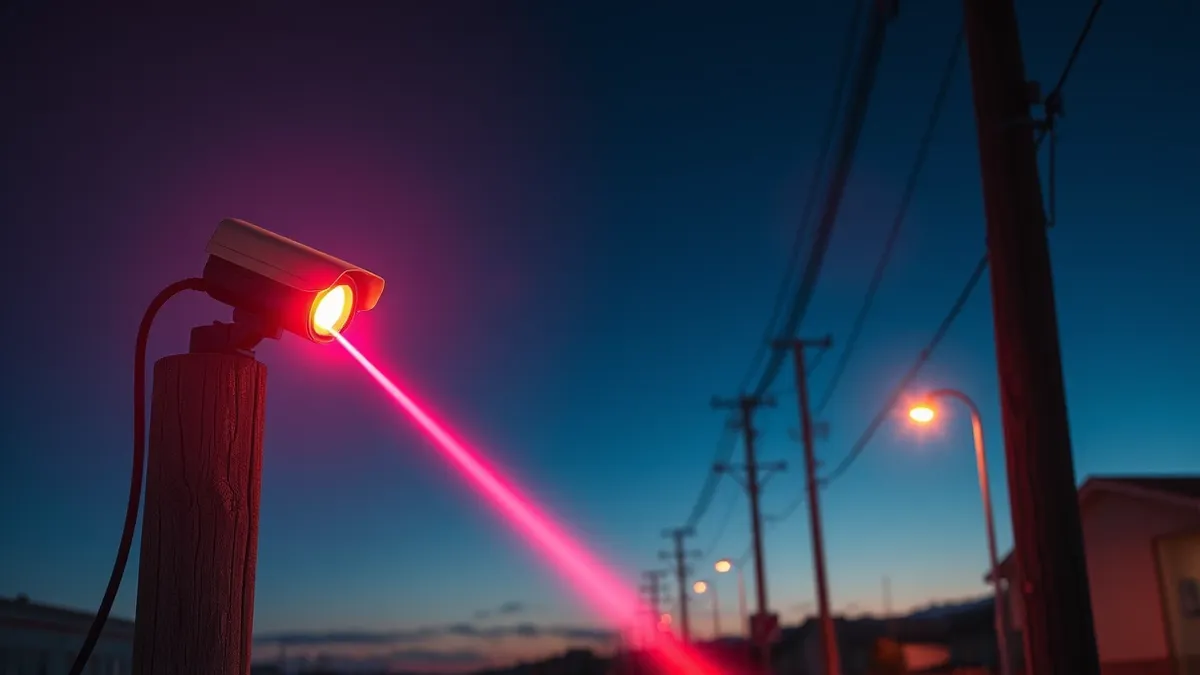
Yes, but only under difficult conditions. Lasers emit concentrated beams of high-intensity light that can overwhelm camera sensors. While bright headlights or sunlight usually cause temporary whiteouts, a sustained laser pulse can generate heat that creates dead pixels or dark spots. In worst-case scenarios, large dead areas render the camera unusable, but this requires holding a high-powered device steady for about ten seconds.
Which camera technologies are most vulnerable?
Most CCTV systems use complementary metal-oxide semiconductor (CMOS) or charge-coupled device (CCD) sensors. These components convert light into electrical charges to process digital video frames. Because they are designed to capture light, they are more susceptible to strong light sources than the human eye. Direct, sustained targeting of these sensors with a laser can overwhelm their processing capacity and cause physical thermal damage to the sensor surface.
Has this been attempted in real-world scenarios?
According to Engadget, a man in Clearwater was arrested in 2021 for pointing a laser at surveillance cameras owned by the Church of Scientology. The laser did not destroy the units but left dead spots on the sensors, causing over $2,000 in damages. The cameras successfully caught the perpetrator red-handed. This case demonstrates that while damage is possible, the act is often illegal and detectable.
What are the operational implications for security teams?
The primary implication is that specific hardware configurations remain a weak point. While the attack is difficult, older CMOS and CCD sensors remain vulnerable to thermal damage from sustained laser exposure. Organizations should audit their surveillance inventory to identify models that may be susceptible to high-intensity light. This risk is low-probability but high-impact, requiring awareness rather than immediate panic.
Questions to ask your suppliers
Security teams should verify whether current camera models include hardware or firmware protections against high-intensity light sources. Ask vendors about the thermal tolerance of the sensor components and whether older units in your inventory are known vulnerabilities. Determine if warranty coverage includes damage from intentional light interference. Inform procurement and risk management teams about these technical limitations so they can factor sensor durability into future equipment purchases and maintenance schedules.
What to do and how to stay safe: CMOS sensors
- Audit surveillance inventory to identify older CMOS or CCD camera models that may lack light-protection features.
- Review site security protocols to ensure physical access controls prevent unauthorized individuals from positioning lasers near cameras.
- Monitor footage for sudden dead pixels or dark spots that could indicate laser interference or sensor failure.
- Consult with vendors about available firmware updates or hardware upgrades that mitigate high-intensity light exposure risks.
Step-by-step guide: Browser Security Settings for Small Business Teams
General security guidance from the TechSec Feed newsroom. It is not confirmed advice from the organisations named in this story.
Frequently asked questions
How long must a laser be pointed at a camera to cause damage?
According to Engadget, a high-powered laser must be held steady for about ten seconds to cause permanent sensor damage.
What types of camera sensors are affected?
Most CCTV cameras using complementary metal-oxide semiconductor (CMOS) or charge-coupled device (CCD) sensors can be targeted.
Is pointing a laser at a camera illegal?
Yes, Engadget notes that in most places, pointing a laser at surveillance equipment is illegal and can result in arrest.