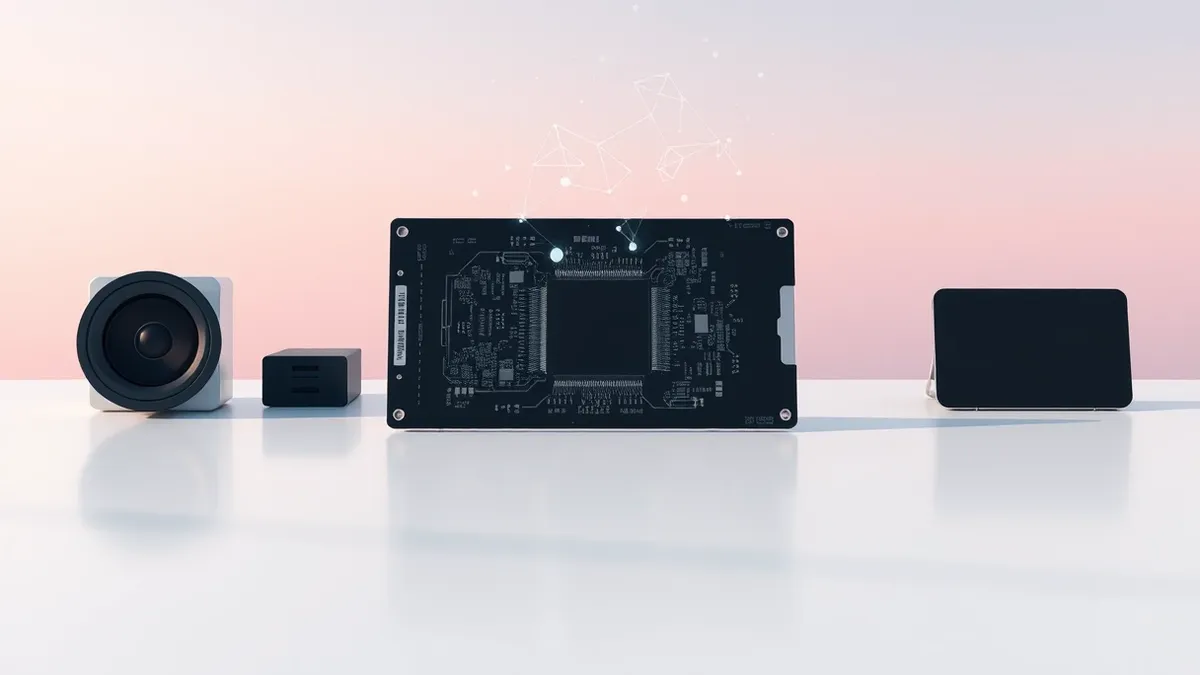
Galahad beta saves AI attention states to encrypted NVMe, slashing reprocessing for vLLM and Llama.cpp engines
Belgian startup launches beta tool to save AI attention states to disk, aiming to reduce GPU reprocessing of identical text inputs.
Key points
- Galahad beta entered release on October 1 2026, targeting vLLM, SGLang, and Llama.cpp engines.
- The system saves key-value cache to encrypted local NVMe storage for reuse after restarts.
- Corbenic attributes its 14x speedup claim primarily to a retrieval component named Blaise.
Corbenic AI launched the beta version of Galahad on October 1 2026, introducing a mechanism to store encrypted key-value (KV) cache data on local NVMe drives. According to TechRadar, the Belgian startup aims to prevent GPUs from reprocessing identical text prompts. The tool targets organizations using vLLM, SGLang, and Llama.cpp inference engines, allowing them to leverage existing server storage as part of the AI working memory.
How does the caching mechanism function?
Galahad saves the attention state built while a model reads a prompt to encrypted local storage. Founder Sietse Schelpe told TechRadar Pro that the system reloads this state when the same text appears again. This process activates specifically when GPU memory is cleared or after a server restart. The KV component, named Taliesin, writes each text block’s state to disk using a fingerprint of the input bytes, model, and tenant.
What drives the performance claims?
Corbenic’s technical paper credits most of the reported 14x speedup to Blaise, a retrieval component, rather than the SSD loading itself. Schelpe emphasized in an email to TechRadar Pro that the stored copy only engages once GPU memory has been evicted. The approach avoids recomputing the document’s attention state from the first token, a step called prefill, which standard serving engines typically repeat for subsequent questions about the same document.
Who else offers similar capabilities?
The market already contains several alternatives for persisting KV cache to storage. TechRadar notes that LMCache, Nvidia Dynamo and CMX, WEKA, and Phison already provide similar functionality. Galahad’s stated edge is exact, fail-closed reuse within a single small library. The company positions its solution as complementary to existing hardware, requiring no special hardware beyond the NVMe drive already present in the server.
Questions to ask your suppliers
Operations teams should verify whether new caching tools require changes to existing storage configurations or encryption standards. Check if the vendor’s solution integrates seamlessly with your current inference engines without disrupting service levels. Determine who within the organization is responsible for monitoring cache integrity and handling potential data leakage risks. Ensure that procurement and security teams review the vendor’s data handling practices before deployment.
What to do and how to stay safe: Corbenic AI
- Review current inference engine configurations to identify opportunities for reducing redundant text processing.
- Verify that local NVMe storage meets the encryption requirements specified by the caching solution.
- Monitor GPU memory usage patterns to determine if cache eviction is causing performance bottlenecks.
- Evaluate the impact of third-party caching libraries on overall system latency and reliability.
Step-by-step guide: Browser Security Settings for Small Business Teams
General security guidance from the TechSec Feed newsroom. It is not confirmed advice from the organisations named in this story.
Frequently asked questions
Does Galahad require special hardware?
No, founder Sietse Schelpe told TechRadar Pro that no special hardware is needed beyond the NVMe drive already in the server.
Which inference engines does Galahad support?
According to TechRadar, Galahad promises exact, encrypted KV cache reuse for vLLM, SGLang, and Llama.cpp.
When does the cached data get used?
The stored copy comes into play only once GPU memory has been cleared or the server has restarted, per Schelpe.